- TICKETS. Get the best NFL seats in Tickets MARCA
- Pittsburgh Steelers. Aaron Rodgers doesn't respond to the Steelers, and another team could make him its starting QB
- New England Patriots. Patriots could give the final hit to Stefon Diggs following his breakup with Cardi B after the Super Bowl
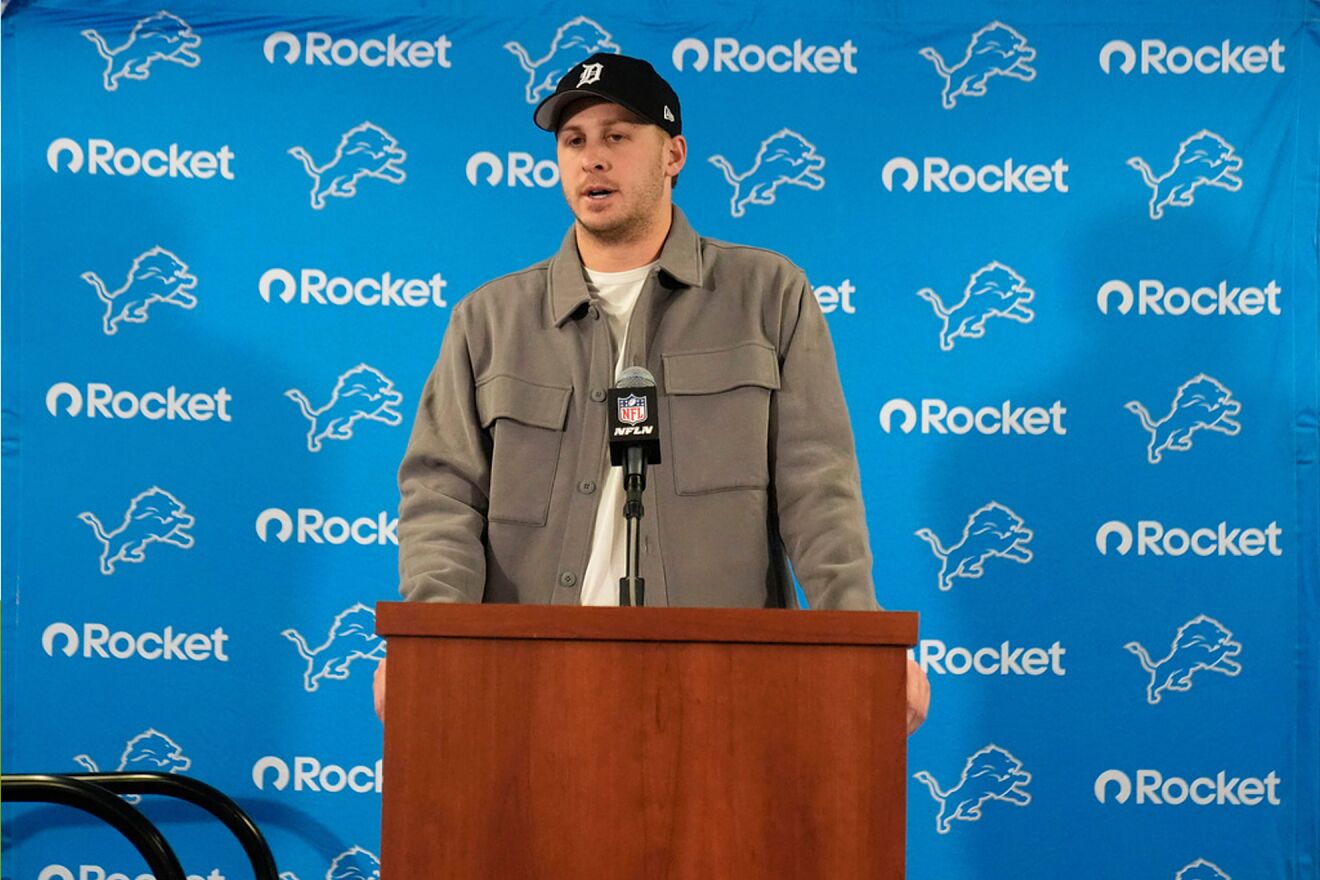
The Detroit Lions enter the 2026 offseason with momentum as contenders - but also with a major financial hurdle. Like teams built around high-paid quarterbacks such as Patrick Mahomes and Dak Prescott, Detroit now faces the reality that elite talent comes with complicated cap management with Jared Goff.
While league activity intensifies, the Lions' most urgent issue is financial flexibility. The NFL recently announced that the salary cap will increase from $279.2 million in 2025 to $301.2 million in 2026 - a jump of roughly $22 million per team. On paper, that sounds helpful.
In reality, it's not enough.
According to Over the Cap, Detroit currently sits approximately $12.2 million over the projected 2026 cap, ranking fourth worst in the NFL behind the Cowboys, Vikings, and Jaguars. That means the Lions must clear at least that amount before the March 11 deadline at 4 p.m. ET.
Jared Goff's $55 million salary spike leads financial crunch
At the center of Detroit's cap dilemma is quarterback Jared Goff. The veteran signal-caller has been instrumental in the team's resurgence and is undeniably deserving of his payday. However, his 2026 base salary jumps dramatically - from $18 million to $55 million, according to Spotrac.
That increase alone reshapes the Lions' financial landscape.
Goff isn't the only star seeing a major raise. Edge rusher Aidan Hutchinson's guaranteed money climbs from $5.5 million to $29.6 million. Wide receiver Amon-Ra St. Brown jumps from $8.3 million to $27.5 million. Meanwhile, cornerstone offensive tackle Penei Sewell sees his base salary rise from $1.5 million to $19.9 million.
In short, Detroit's young core is cashing in - and deservedly so - but the timing creates a tight squeeze.
So how do the Lions remain competitive while managing these commitments?
Contract restructures appear inevitable for Goff
The most practical solution is restructuring existing deals. Christian Romo of the Detroit Free Press explained the likely approach.
The more likely way the Lions save money before March is by restructuring current contracts.
He detailed how that process works: "The simplest way this can be done is by converting some base salary into a signing bonus, which allows the player to still get paid while the team's cap hit is delayed for later years."
Romo added that restructuring is "a win-win for the team and player, as long as the player is willing to get paid in a different way."
Alternative options - such as player retirements or trades - remain on the table. However, moving key contributors would undermine Detroit's Super Bowl aspirations. As Romo noted, trading players could provide "salary relief," but the most expensive contracts belong to the Lions' most essential pieces.
Ultimately, Detroit's situation mirrors what perennial contenders experience: paying franchise players means constant financial balancing. The Lions have built a roster capable of competing deep into January - now they must prove they can manage the cap just as effectively as they manage games on Sunday.