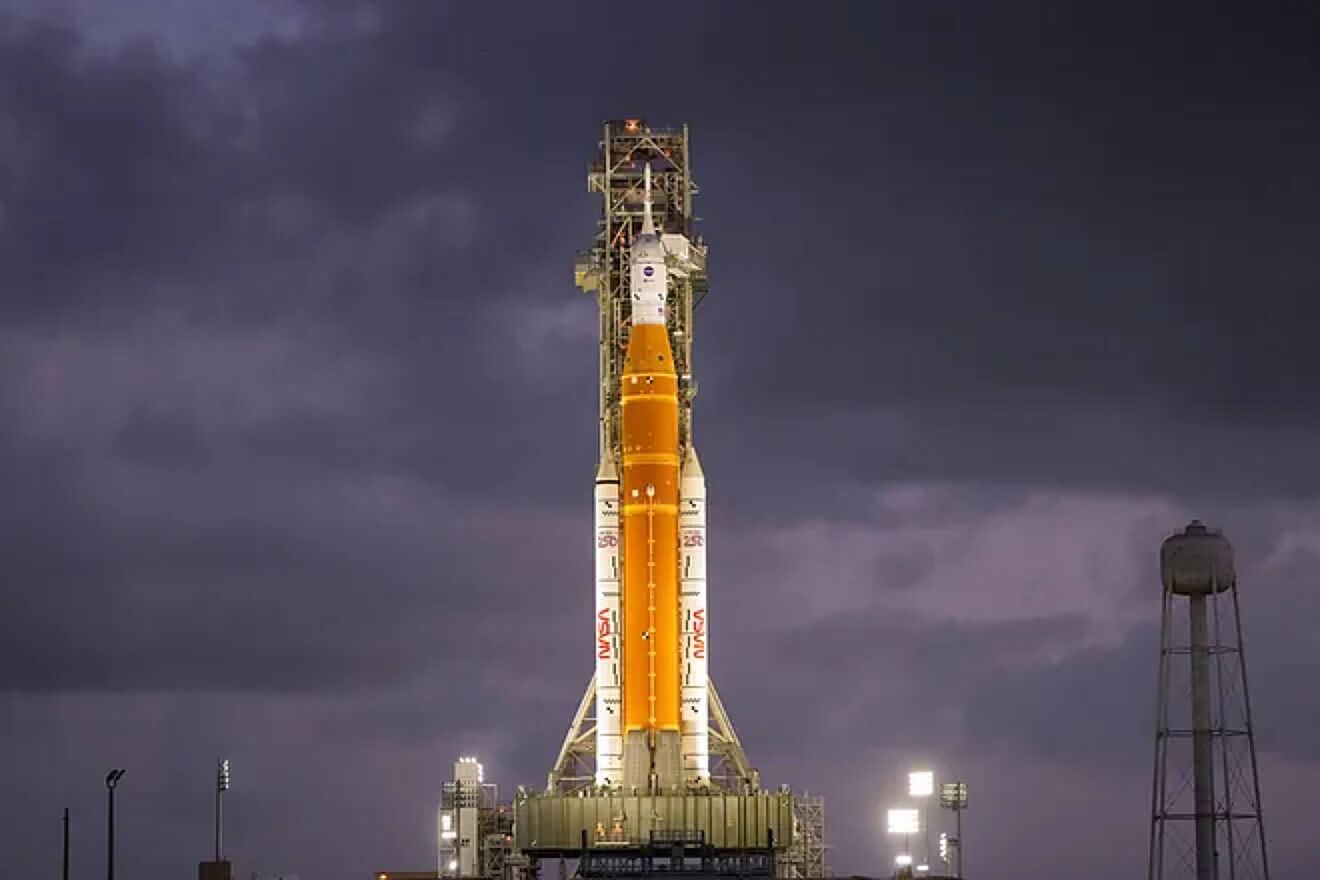
It was on February 3 that NASA completed a wet dress rehearsal for its Artemis 2 mission. After that, now in March, the completion of this test brings the agency one step closer to its goal of returning astronauts to the moon.
The term "wet" refers to the loading of cryogenic fuel into the rocket's huge tanks: about 700,000 gallons (2.6 million liters) of liquid hydrogen and oxygen. Once fueling is complete, the team conducts a simulated launch countdown. This includes several runs, in which stopping and resuming the countdown is practiced to simulate real conditions and different possible abort scenarios.
These tests are designed to verify the readiness of both the launch team and the hardware. They allow NASA to identify technical problems in a controlled environment where failure does not mean mission loss, as well as practice real-time troubleshooting.
The countdown and two clocks
The Artemis 2 rehearsal followed a sequence that technically began more than 49 hours before the simulated liftoff. To manage these complex times, NASA uses two separate timers.
- The L-minus clock counts down to the opening of the launch window and never stops
- The T-minus clock serves as a checklist that follows the completion of technical milestones, stopping and restarting as needed.
During a dress rehearsal with fuel loading, the T-minus clock is intentionally stopped or even reset during planned pauses. This repetition is intended to ensure that ground equipment and software are prepared in case an actual launch is delayed due to technical problems or weather conditions.
However, the tests also include unplanned pauses to troubleshoot anomalies in real time. During the Artemis 2 test, the team stopped the clock for several hours to manage a troublesome fuel line that was leaking liquid hydrogen while being loaded into the rocket.
A mission for the future
The agency's leaders are analyzing the data collected and planning a second dress rehearsal with refueling before launch.
With the new launch, the Artemis 2 crew of NASA astronauts Reid Wiseman, Victor Glover and Christina Koch, along with Canadian astronaut Jeremy Hansen, has completed its pre-launch quarantine in Houston. They will return to quarantine approximately two weeks before the next launch attempt.