- News. Aldi deals this week: don't miss these April 15-21 offers
- News. D4vd Net Worth: the fortune of the singer arrested in connection with the murder of Celeste Rivas
Talking about the pyramids of Egypt almost always leads to the same place: Mystery.
For years, these structures have been seen not only as architectural works, but also as something difficult to explain. And in this space, theories have found room to grow. From advanced civilizations to ideas that are completely removed from history, such as aliens, everything has passed through there.
But it was not always about what was known, but about what was not fully understood.
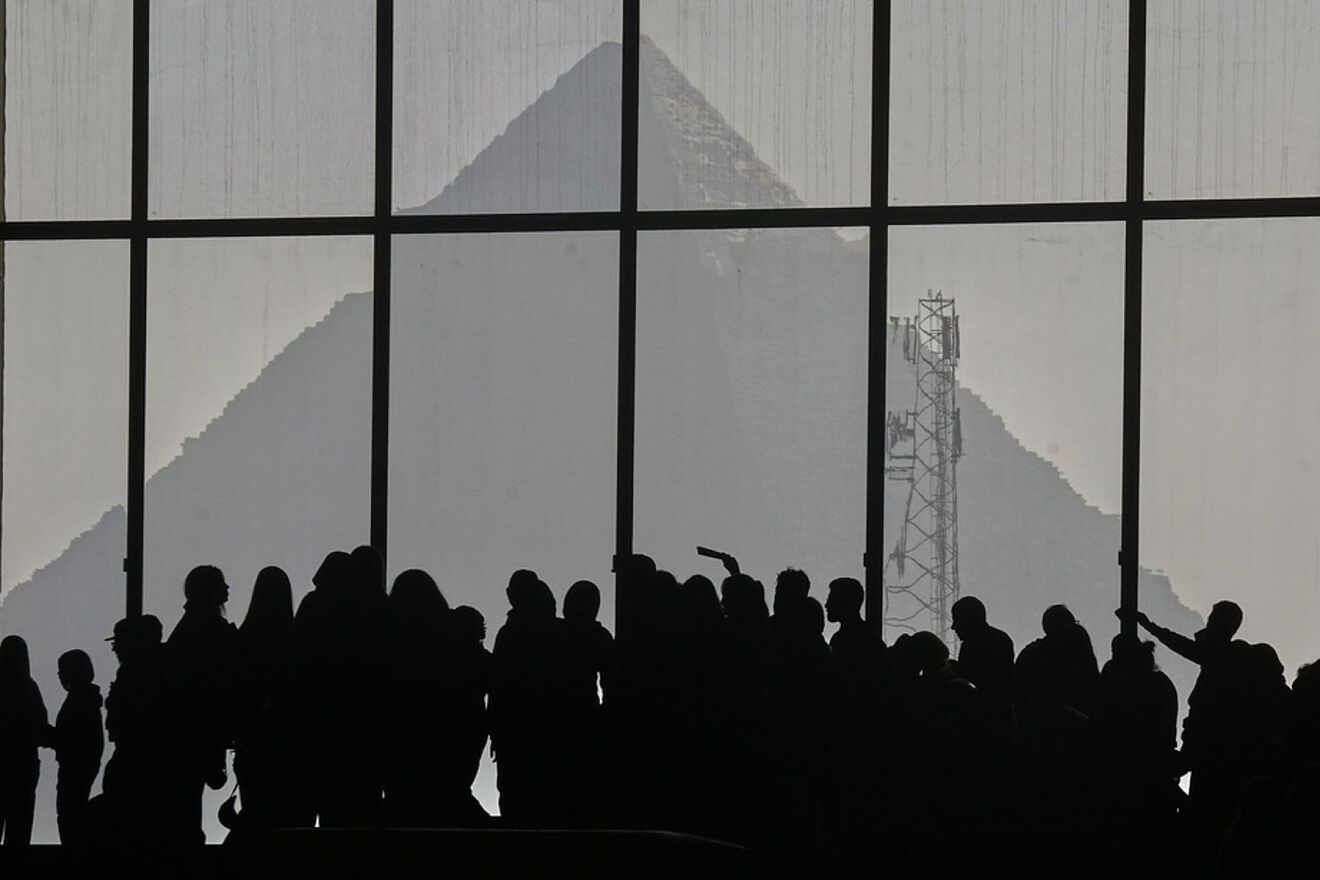
The Great Pyramid of Giza has perhaps been the best example of this. Its size, the number of blocks and the precision of its structure have fueled for decades the idea that its construction required something more than what existed in its time.
And that's where a new proposal comes in, a different explanation
A recent study published in NPJ Heritage Science suggests a more concrete way of understanding how the pyramid was built.
The idea revolves around a ramp integrated into the structure itself. Not external, not visible, but incorporated into its design, allowing the stone blocks to be moved progressively as construction progressed.
Over time, this same ramp would have been covered, eliminating any obvious trace of its use.
This theory was developed from a simulation that took into account the tools available at that time: sleds, ropes, levers and the use of water to reduce friction.
Under these conditions, the model suggests that the pyramid could have been built in a period of between 20 and 27 years.
And that changes the starting point.
Because the conversation stops revolving around the impossible, and returns to what was within reach at that moment.
That doesn't take away from the work, on the contrary, it makes it more concrete.
Because understanding how it was done does not eliminate the wonder. It just puts it somewhere else, where the value is not in the inexplicable, but in what was possible with the resources of the time.